20 Excellent Ideas For Choosing Anti-Termite Control Services In Jakarta
Wiki Article
Jakarta Homes: Subterranean Termite Defense
Walk through any Jakarta neighborhood--Menteng, Kebayoran Baru, Kelapa Gading--and you will see them: door frames swollen at the base, fine brown lines climbing foundation walls, tiny pinprick holes in skirting boards. The majority of homeowners think it's wear and tear. It is not. It's a sign a subterranean ant colony is in the building, feeding continuously, 24 hours per day and 7 days a week. They are fed by Jakarta's constant humidity and by the accidently inviting modern construction techniques. It is important to disregard the advice of imported pest-control manuals and instead adopt strategies tailored for Jakarta's specific species, soil, climate and soil.
1. The window and Door Frame Epidemic
The termites from Jakarta are not able to enter concrete slabs. They get into the wood where it is able to meet masonry high. Around half of all documented termite attacks occur in window sills, door jambs and wooden frames that are embedded in brick walls. Anti-termite services which arrive with drills and rods targeted at the floor are fighting a wrong battle. The real battlefield lies at waist level. The moisture condenses on the glass and seeps onto the untreated wood.
2. Four Species, One City, Different Rules
Jakarta is the home of at least four subterranean termites species. They don't all behave the same. Coptotermes is the most agressive structural invader. Microtermes Insperatus is more destructive but is also dominant numerically. Macrotermes gilvus builds visible mounds in gardens. Coptotermes curlvignathus would prefer live trees to move into houses but when wood runs out. The correct bait cannot be picked by exterminators who are unable to differentiate between the two.
3. The Six-Week Truth
A colony cannot be destroyed in a single night. It takes anywhere from six to eight week for chlorfluazuron to move through colonies by trophallaxis - the mouth-to -mouth food sharing that defines termite social life. Pest control companies that promote 24/7 eradication utilize contact poisons to kill only the foragers. The reproductive nucleus remains unaffected.
4. Above-Ground Power Stations Revolutionizing Everything
The bait stations in the perimeter can be helpful in monitoring the infestation but are ineffective if it has already begun inside the building. Above-ground stations--small bait cartridges locked directly onto mud tubes - force toxicants into the colony's active highway. Jakarta exterminators who do not operate above-ground stations are selling inspection services, not treatment.
5. The Soil Moisture Trap
Jakarta's silty, clayey soils hold water. Termites are not only tolerant of conditions that exceed 22 percent soil moisture they actively seek it out. When companies that fight termites inject chemicals into the soil without first assessing the drainage, downspout discharge or irrigation overspray, they are applying poisonous poisons to an environment that termites find hospitable.
6. Pine Stake Forensics
Before they recommend treatment, experienced exterminators in Jakarta bury Pinus merkusii stakes which have not been treated in the area around them. After 30 days, they break them out and weigh them. Weight loss of more than 30% indicates a excessive foraging stress and is a reason to consider an intervention. It is not an uninformed guess. This is an accurate, easily accessible the entomology.
7. Green Belt Hazard
Nine Jakarta sub-districts carry extreme termite risk: Penjaringan, Pademangan, Palmerah, Kebayoran Baru, Jagakarsa, Pesanggrahan, Kramatjati, Duren Sawit, and Cipayung. These areas share one characteristic--significant remaining green space that sustains parent colonies. These areas require that homes be checked every quarter and constantly lured. Annual contracts aren't enough.
8. New constructions are not secure
Termites adapt to urban development. They nest in fill soil imported to build new housing estates. They graze in utilities ditches and occupy the landscaping for irrigation that developers put in. It is vital to understand that a new house in BSD or Bekasi was not constructed with the clean slate. Instead, it was transformed into an breeding ground for termites at from the time the first plants were planted.
9. Short-Rotation teak is not the teak your grandfather used to drink.
The termites are deterred by the silica, and oils found in traditional Javanese teak from the tree. Modern teak from plantation harvested at 15 years is not. Many of the "teaks" employed in the modern homes of Jakarta are botanically identical however chemically unmature. If homeowners pay for termite-resistant timber and receive it, they usually get termite-resistant wood.
10. The Mud Tube Forensics Rule
Don't scrape or sand the tube of mud without first verifying what it shows. The tube's origin point could be used to identify the soil's entrance zone. The diameter of the tube is related to colony ages. The location (bathroom, outside wall, or kitchen) tells you what moisture sources are feeding the infestation. To destroy the tube before reading it is the same as erase the security footage with no being able to watch it.
Conclusion
The houses of Jakarta are not being attacked by an invading force. They are a local resident who has adapted to the city's conditions. The species is well-known. The patterns of attack are recorded. The treatment time-lines are monitored. There is only one thing to consider the question of whether homeowners, as well as the antitermite service they contract, will renounce the myths surrounding pest control and embrace methods that have been that have been validated by the termites that live underground in Jakarta. The research is in place. It is your choice. Take a look at the best jasa basmi rayap for blog recommendations including jasa anti rayap, pembasmi hama, anti rayap untuk kayu, basmi rayap, anti rayap terbaik, cara membasmi rayap kayu, anti rayap terbaik, cara basmi rayap kayu, rayap adalah, kayu anti rayap and more.
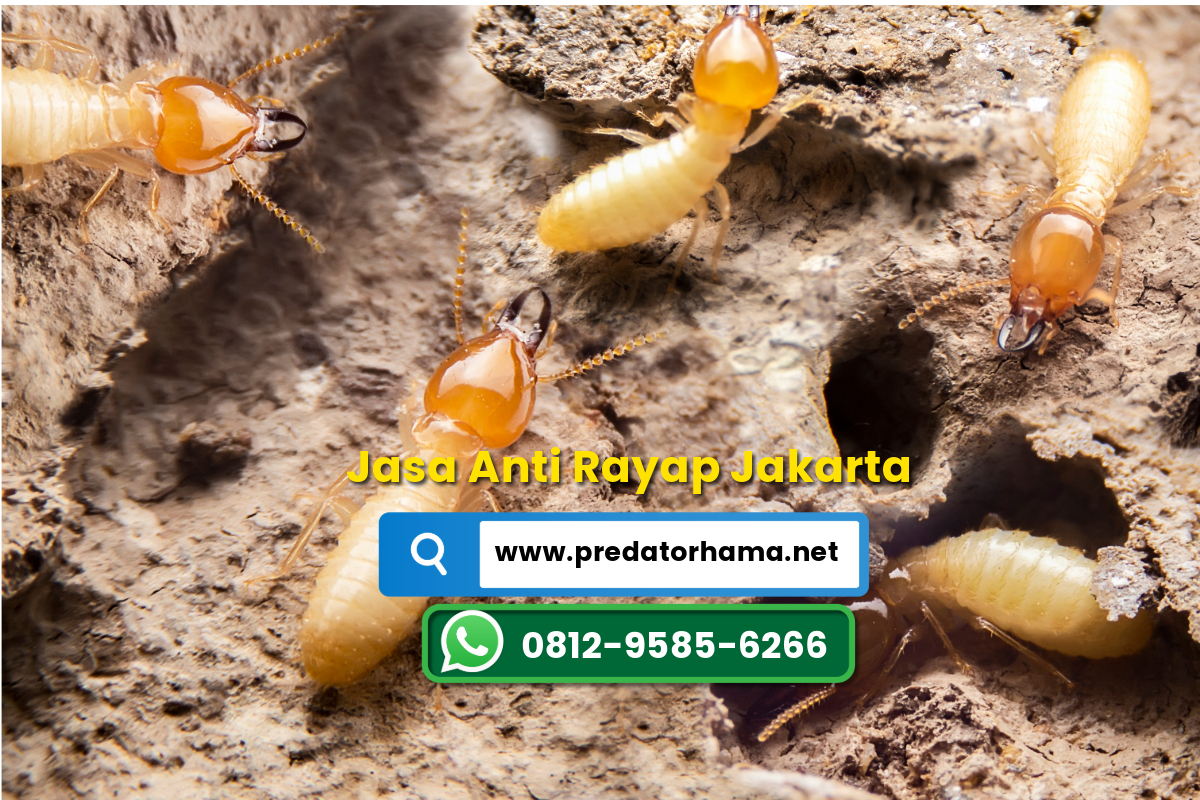
Alternatives To Fumigation For Termites In Indonesian Villas Such As Jakarta
Indonesian homeowners have been taught to believe that tent fumigation is the only option for subterranean wood termites infesting ceiling spaces, wall cavities and timbers embedded. This belief is cultivated by fumigation companies and sustained by the fear of homeowners. The tent is erected and the neighborhood complains and the family is forced to leave for three days. Then, the colony that lives within the walls will die. The colony that was located in the garden, and was not affected by the gas, rebuilt the foraging tunnels and entered the structure after 18 months. Fumigation cleans buildings, but does not affect the landscape reservoirs. The idea of offering alternatives to Jakarta termite control service that is available to the villa market is not charity, but rather an opportunity to establish themselves in a competitive market. Tenting is not a viable alternative for people who have eight bedrooms in Pondok Indah. They would like to eradicate the colony without the drama of evacuation and the risk of returning.
1. Baiting kills the colony; Fumigation kills termites in
Tent fumigation delivers lethal concentrations of gas into each empty space in the building. Every termite in the structure is killed. The colony beneath the driveway, in the garden, or the property next to it isn't affected. Through trophallaxis, this bait delivers poison directly to the nucleus of the colony. The colony will die. The structure becomes reinfestation-resistant because the source population is eliminated. When homeowners understand the difference, they rarely need to request fumigation.
2. Heating Treatments can reach where Gases Cannot
The internal temperature of the wood is increased to 50 degrees Celsius for an hour, heating the entire structure. It's a safe and efficient method to kill all kinds of living things, including eggs. There are no tents or chemical residues are needed. The process of heating Indonesian villas is a good option for those with intricate carvings, exposed beams, or timber from the past. The equipment is there. The contractors are there. The homeowner must be aware of the alternatives.
3. Electro-Gun Technology for Localized Infestations
Infestation zones are heated until the point of death using high-frequency devices. They do not damage the materials around them. Villa owners who find active termites in one carved door frame or a single roof truss, electro-gun treatment eliminates the problem in one go without evacuating the household. Jakarta exterminators do not import this technique because it's not an experimental.
4. Wood Injection Systems Preserve Architectural Fabric
Liquid borate solutions injected under pressure in drill holes move through the timber via capillary action, rendering the entire component toxic to termites over the course of years. The holes for drilling were less than the holes of existing nails. The carvings remain intact. The door frame remains in place. Indonesian villa owners often refuse this treatment, because exterminators only propose it following the proposal of replacement. If they are offered prior to replacement being accepted.
5. Above-Ground Baiting for Hidden Cavity Colonies
The most common method for fumigation used when Coptotermes Gestroi builds an aerial nest inside the wall cavity or roof empty space is tent fumigation. Bait stations that are above ground and secured to active mud tubes that emerge from the corners of the ceiling, or baseboards, deliver poison directly to the nest's population. The colony eats the construction crews it employs when they travel back through the tube that was baited. No tent. No evacuation. No evacuation.
6. Nitrogen Freezing for Small-Scale Heritage Components
Liquid nitrogen circulating through sealed chambers around the wood that is infested quickly freezes termites within the wood. Following the freeze, there is a thaw that is followed by another. This is cryogenic poisoning and not chemical intervention. Nitrogen freezing can keep the patina of high-end museum Javanese carvings or furniture. The treatment of heat and injecting could darken it.
7. Physical Barrier Retrofit Prevents Reinfestation
The house that is prone to evaporation every year without ever putting up physical barriers, is renting temporary sterility. Retrofitting stainless steel mesh or polymer sheets via perimeter excavation prevents subterranean ants from re-entering the structure once colony elimination is complete. Fumigation looks best when combined with a permanent barrier. Sell the combination: Remove the active colony using baiting and install the barrier.
8. Carbon Dioxide Purging for Enclosed Spaces
Pressurized carbon dioxide introduced into sealed attic spaces or crawl areas releases oxygen into a lethal level for termites trapped within these space. It is not necessary to cover the entire structure and only a small portion of it. CO2 is a gas which dissipates rapidly, doesn't leave any residue, and poses no risk to the inhabitants when re-entry procedures are adhered to. Fumigation of Indonesian villas is not necessary in situations where termite activity on roofs is low.
9. The Baiting Timelines have to be made public upstream
Fumigation kills termites colonies in 72 hours. Baiting kills colonies in between 6 and 8 weeks. Owners of villas used to tenting won't take baiting seriously if the timing is announced after mobilization. When the timeline is disclosed prior to the contract's execution, it's accepted as part of the deal. Jakarta anti-termite service providers that conceal the baiting duration after the proposal has been accepted create their own issues by charging close rates.
10. It is crucial to determine and target the colony of reservoirs.
In Jakarta the entire city is within a few yards of at least one colony regardless of whether it is a park, a cemetery or an undeveloped zone. Fumigation ignores this colony. Baiting, heat treatment, and injections do not take into account this colony unless specifically deployed beyond the structure perimeter. Alternatives to fumigation include landscape grids that target the external colony. The colony could return to villas in the course of 18 months. The exterminator that is treating the structure without treating its reservoir is only offering temporary relief.
Also, you can read our conclusion.
Indonesian homeowners of villas do not want to evacuate. They do not want tents set on their property. They don't want to be asked by their neighbors if they're plagued. What they want is the colony dead and the assurance that it will not come back. Fumigation can achieve the first goal reliably, but not the second. Baiting, heat treatment, microwave technology, wood injection, nitrogen freezing, CO2 purging as well as physical barrier retrofits achieve both goals when used as integrated protocols instead of other alternatives. Jakarta anti-termite services that claim to be alternative fumigation service providers using multiple elimination methods and educating technicians about species-specific protocols and documenting the results of measures to prevent reinfestationthey will be able to capture the top villa industry currently held in tents for contracting. The equipment is huge. The training investment continues. The market demand is present. Villa owners are seeking "fumigation options Jakarta" on a regular basis. Which exterminators, who have established credentials and a list of alternatives, will show up in search results and which ones will continue to use the tent? Check out the best anti rayap for blog info including pintu anti rayap, jasa pembasmi rayap, rayap kayu, jasa anti rayap, lemari anti rayap, jasa pembasmi hama, cara membasmi rayap kayu, jasa pengendalian hama, rayap rumah, basmi rayap and more.
